

Tell me more about self-managed abortions and what do I do if it isn’t going well?
What is a self-managed abortion?
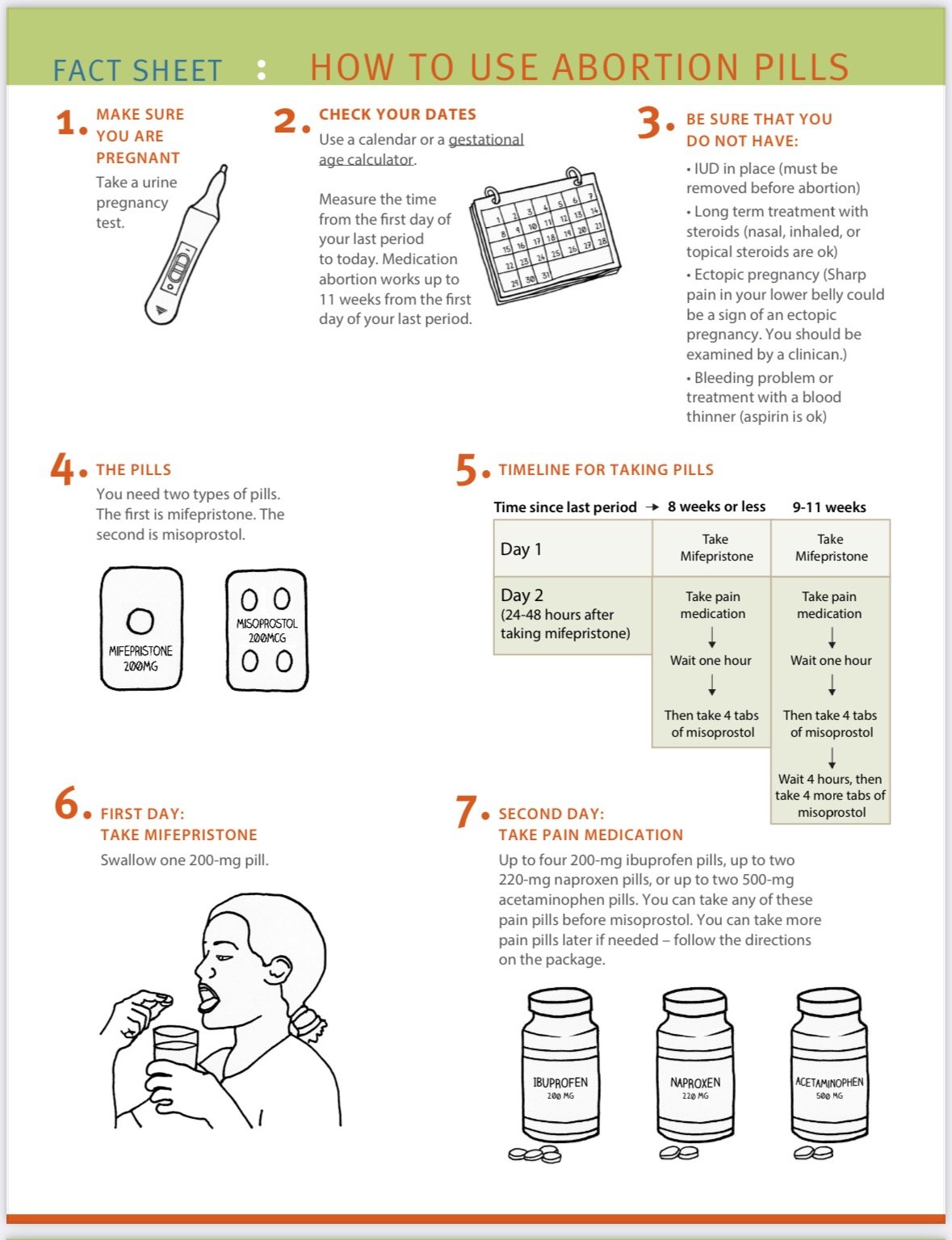
A self-managed abortion means using abortion pills outside of a clinic setting, most often at home. It typically involves two medications:
Mifepristone
Blocks progesterone, the hormone needed to sustain a pregnancy.
Misoprostol
Causes uterine contractions and bleeding to empty the uterus, similar to a miscarriage.
This method is very safe and highly effective, especially in the first 12 weeks of pregnancy. Many people choose this option because it offers privacy, convenience, and flexibility when clinic care is difficult to reach or unavailable.
What to expect
Everyone’s experience is different, but most people describe abortion pills as feeling similar to a very heavy period or miscarriage.
Cramping and bleeding
Cramping and heavier-than-period bleeding are normal and expected. Cramping often comes in waves as the uterus contracts. Bleeding tends to be heavy for several hours and then gradually slows over the following days.
Timing
Most people pass the pregnancy within a few hours after taking misoprostol, though some may take longer. Lighter bleeding or spotting can continue for several weeks.
Side effects
Side effects can happen because misoprostol affects the uterus and the digestive system. They are common and usually short-lived:
Nausea or vomiting
Diarrhea
Chills or feeling feverish
Headache or fatigue
These symptoms typically improve within 24 hours. Rest, fluids, light food, and comfort measures can help.
Pain and what is normal
Yes, it can hurt.
Cramping ranges widely from person to person. Some experience discomfort similar to strong period cramps. Others feel more intense pain for a few hours while the uterus empties.
Both experiences are normal.
Pain is influenced by many factors including:
Individual pain thresholds
How far along the pregnancy is
Uterine sensitivity and cramping patterns
Prior childbirth or gynecologic history
For most people, the most intense pain lasts a few hours and improves significantly once the pregnancy passes.
Pain management tips
There is no “tough it out” requirement here. Pain relief is both appropriate and encouraged.
Helpful options include:
Ibuprofen as directed (more effective for cramping than acetaminophen)
Heating pads or warm baths
Changing positions (sitting upright, rocking, squatting)
Deep breathing or distraction
Support people if that feels safe for you
Rest after the process is important. Your body has been through real work.
What you may want to have on hand
Preparing a few comfort essentials ahead of time can make the process feel calmer and more manageable:
Maxi menstrual pads (bleeding can be heavier than a normal period)
Ibuprofen (Advil) for cramping pain
Heating pad or hot water bottle
Anti-diarrheal medication (Imodium)
Prescription anti-nausea medication such as Zofran, if you are able to get one
Comfort items like blankets, hydration drinks, light snacks, and easy meals
A thermometer to check for fever if you feel unwell
A support person or helpline contact if you want emotional reassurance nearby
Being stocked and comfortable ahead of time helps many people feel safer and more prepared.
When to seek care
Complications are rare, but you should get medical help if you experience:
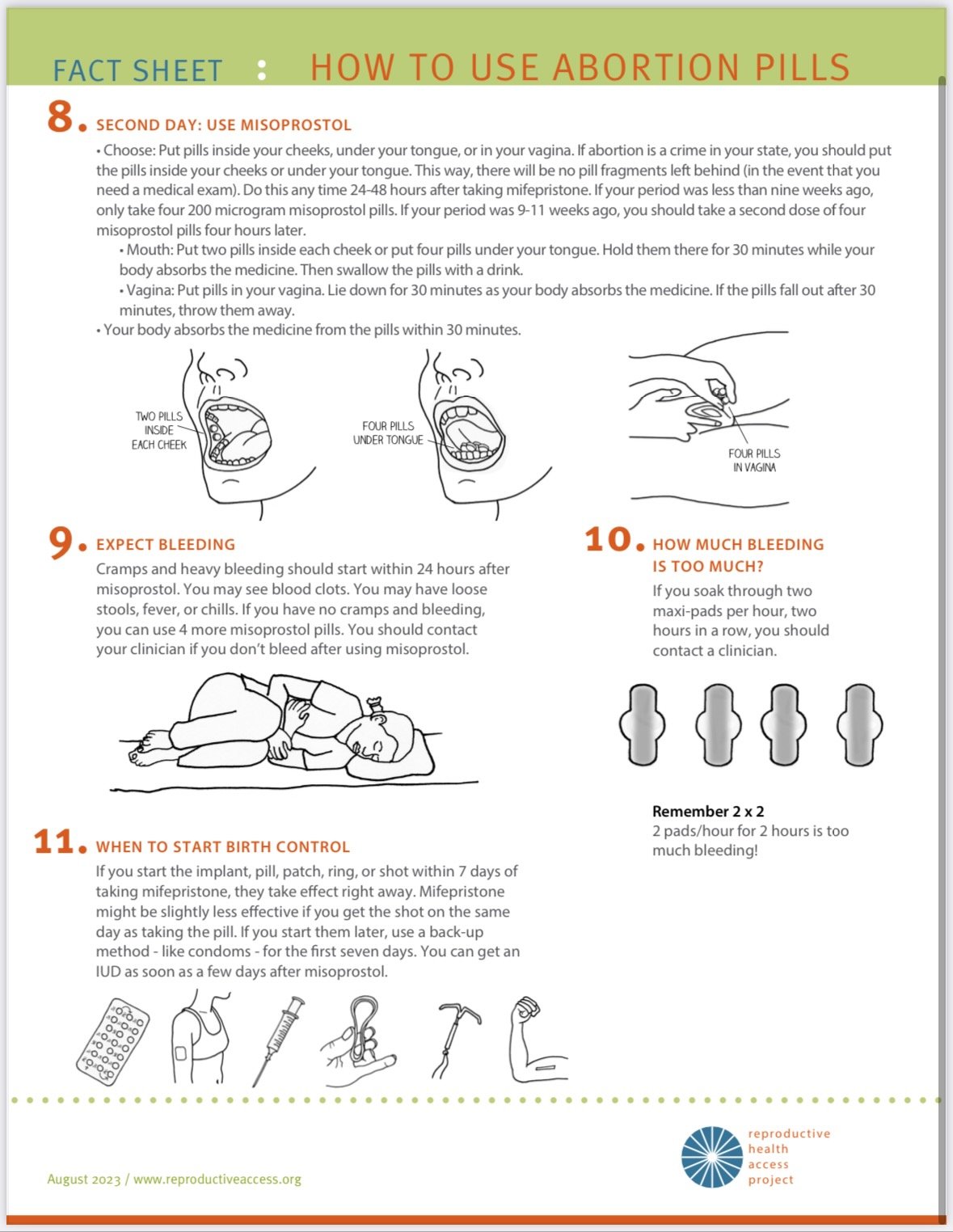
Heavy bleeding: Soaking more than two maxi pads per hour for two hours in a row
Severe pain: Pain that doesn’t improve after medication or rest
Prolonged fever: Fever over 100.4°F lasting more than 24 hours
No bleeding at all: Bleeding that doesn’t begin within 24 hours after taking misoprostol
What to do if something doesn’t feel right
Go get medical care.
If you need help, go to the emergency room or urgent care. You may tell them you are having a miscarriage. There is no test that can detect abortion pills, and the medical presentation is exactly the same as a spontaneous miscarriage. Providers are required to treat you.
Call for real-time support.
M+A Hotline: 833-246-2632
Clinicians who provide live guidance about abortion pills.Reprocare Healthline: 833-226-7821
Confidential peer support during and after the process.
Get confirmation if unsure.
A healthcare provider can check whether the abortion is complete if you have lingering symptoms or concerns.
How do I know if it worked?
Most people know their abortion was successful when they experience heavy cramping and bleeding followed by a noticeable decrease in pregnancy symptoms.
Signs that the abortion likely worked include:
Passing clots or tissue along with heavy bleeding
Cramping that builds and then eases once the pregnancy has passed
Bleeding that gradually lightens over the following days or weeks
Pregnancy symptoms (like nausea or breast tenderness) fading over several days
It’s normal to not “see” anything recognizable pass. Every body is different, and the pregnancy tissue can look like clots rather than anything clearly identifiable.
We recommend taking a home pregnancy test at 4 weeks after taking the pills
(earlier tests may still show positive due to leftover pregnancy hormones)
Signs it may not be complete
In some cases, an abortion may not fully work on the first attempt. You may want medical guidance if:
You had little or no bleeding after taking misoprostol
Your pregnancy symptoms do not improve over time
You have a positive pregnancy test weeks later that doesn’t fade
Bleeding continues at heavy levels without improvement
If this happens, there are options for next steps, including additional medication or in-clinic care if desired. Support hotlines can guide you through those decisions.
Notes on how misoprostol is taken
Misoprostol may be used vaginally or by mouth (buccal or sublingual). Both routes are effective.
With vaginal use, small pill fragments can remain visible for up to four days afterward. For anyone concerned about this, taking misoprostol by mouth avoids visible remnants.
When taken orally, misoprostol leaves no detectable evidence in the body. There is no test that identifies use, and the symptoms appear medically identical to miscarriage if someone seeks emergency care.
In simple terms:
Vaginal use may leave temporary pill traces. Oral use leaves no trace.
Finding reliable guidance, pills, and support
If you’re considering a medication or self-managed abortion, it’s especially important to use resources that stay up to date on what’s safe, available, and discreet across different states. Starting with accurate information can help you avoid scams, delays, or unnecessary stress.
Ineedana — ineedana.org
Ineedana is a fast, easy search tool for finding both in-person clinics and telehealth abortion providers. It offers practical details about appointment availability, costs, travel assistance, and location-based services so you can compare options and figure out what works best for you, no matter where you live.
Plan C Pills — plancpills.org
Plan C provides clear, state-by-state guidance on accessing abortion pills by mail, including which services ship to your location, typical costs, delivery timelines, and privacy considerations. It’s one of the most reliable places to begin when exploring pill-by-mail options and understanding what to expect.
Hotlines & support networks
If you want live guidance, emotional support, or peer assistance during a self-managed abortion, these are excellent resources to have on hand:
M+A Hotline — 833-246-2632
Clinician-led support for medical questions about abortion pills. Helpful if you feel confused, concerned about symptoms, or just want reassurance from a medical expert.
Reprocare Healthline — 833-226-7821
Peer-based support for logistical questions, emotional care, and practical tips throughout the process.
Aya Contigo
A free, secure app that offers live chat with trained peer counselors who provide support around abortion and contraception in both English and Spanish.
These services don’t sell pills — they exist to offer real-time guidance, compassionate connection, and to help ensure no one has to navigate this experience alone.
Legal questions
While most states do not criminalize self-managed abortion, legal risk can vary based on location and individual circumstances. Confidential legal support can help you understand your rights.
Repro Legal Helpline - 844-868-2812
You are not alone
Hundreds of thousands of people safely use abortion pills each year. Experiences differ, but support exists at every stage of the process.
You deserve autonomy, dignity, accurate information, and care.
It is worth noting: Some telehealth providers can legally ship abortion pills by mail, but access varies by state. Certain states have "shield laws" that protect healthcare providers who prescribe and mail medication abortion from outside hostile states. However, patients may still face legal risks when accessing pills by mail, depending on state laws.
If you’d like to get pills by mail you can look at: Plan C Pills
If you have legal questions, we recommend contacting the Repro Legal Helpline at 844-868-2812 for confidential guidance.
